

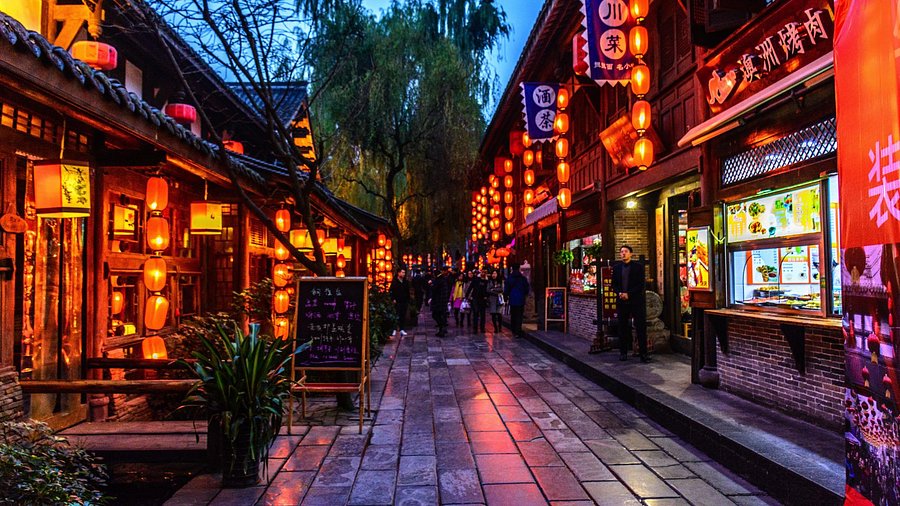
Nestled in the historic heart of Qingyang District, just a gentle 12-minute walk from the hushed sanctuary of City Xiyouli Hotel at No. 88 Section 2, Renmin Middle Road, lies Jinli Ancient Street (锦里) — not merely a tourist promenade, but a living tapestry woven with centuries of Sichuanese spirit. Here, time doesn’t march forward—it lingers. It drifts through lantern-lit alleys, curls around steaming bowls of dan dan noodles, and echoes in the chime of hand-cast wind bells suspended above artisan stalls.
For guests of City Xiyouli—where silence is sacred, and every detail whispers of tradition—Jinli isn’t a destination to check off a list. It’s a sensory poem you step into… and carry home in your bones.
More Than a Street: A Living Museum of Sichuan Heritage
Unlike sanitized “cultural zones” found elsewhere in China, Jinli retains its soul—not because it’s preserved behind glass, but because it’s lived in. The architecture? Authentic Ming- and Qing-era wooden facades, their painted eaves adorned with dragon motifs and calligraphic plaques. The cobblestones? Worn smooth by generations of farmers, merchants, poets, and now, travelers seeking authenticity.
As dusk falls, thousands of red paper lanterns ignite along the narrow lanes, casting a warm glow over carved stone lions, tea houses tucked beneath tiled roofs, and shadow puppet theaters where elders narrate ancient tales of the Three Kingdoms—the very legends that inspired the quiet ink art on your hotel room walls at City Xiyouli.
This is where history breathes.
The Art of Slow Discovery: What You’ll Experience
🏮 Craftsmanship That Tells Stories
Forget mass-produced souvenirs. In Jinli, every object carries lineage:
- Sichuan Opera Face-Changing Masks: Watch masters paint them by hand using ancestral formulas—each color symbolizing loyalty, vengeance, or wisdom.
- Chengdu Embroidery (Shu Xiu): Delicate silk threads stitched into dragons, phoenixes, and lotus blossoms—some pieces take months. Buy one, and you own a fragment of intangible cultural heritage.
- Hand-Carved Bamboo Fans & Tea Sets: Crafted by artisans whose families have worked these materials for five generations. Ask them to inscribe your name in traditional script—they’ll do it quietly, with reverence.
🍜 Flavors That Speak Louder Than Words
Jinli’s food stalls aren’t vendors—they’re storytellers serving flavor.
- Spicy Cold Noodles with Chili Oil: Not just hot—but layered. The oil is infused with over a dozen spices, slowly roasted and pressed. Taste it slowly. Notice how the heat builds like a sigh, then fades into sweetness.
- Chuan Chuan Xiang (Skewers on Sticks): Marinated meats and tofu threaded onto bamboo skewers, dipped in a numbing, savory broth of fermented soy, chili, and Sichuan peppercorns. Eat them standing beside a street-side pot, steam rising like incense.
- Tanghulu & Candy Sculptures: Crisp candied haws on sticks, shaped like tiny animals or flowers—a childhood memory for locals, a wonder for visitors. Try the rare chrysanthemum tanghulu, made with dried petals and honey from Emei Mountain.
Pro Tip: Skip the crowded central stretch. Wander down the side alleys near the temple gates—there, you’ll find elderly women selling handmade rice cakes wrapped in banana leaves, or men grinding sesame paste fresh from stone mills, still warm from the fire.*
🎭 Living Traditions Around Every Corner
- Shadow Puppetry Shows: At twilight, enter a dimly lit pavilion where leather puppets dance to pipa music, reenacting epic battles from Romance of the Three Kingdoms. The performers speak no English—but their gestures tell everything.
- Teahouse Poetry Readings: On weekends, local scholars gather under willow trees to recite Tang Dynasty verses while sipping Pu’er tea. Bring your own journal. Many guests leave with poems written for them—in ink, by hand.
- Folk Musicians: A blind guzheng player sits beneath an archway, fingers dancing across strings tuned to ancient scales. Sit. Listen. Don’t rush. Let the music settle into your chest.
Why Jinli Feels Different When You Stay at City Xiyouli
Here’s the secret most tourists miss: Jinli is brightest—and truest—at dawn.
While others arrive at noon, packed with cameras and noise, those who stay at City Xiyouli Hotel know better.
Step out of your teak-floored room at 7:00 AM.
The air is cool, scented with damp earth and distant roasting peanuts.
The lanterns are still glowing faintly.
The alleyways are empty except for a few elderly residents sweeping steps, feeding koi fish in hidden courtyards, or brewing tea in clay pots outside their homes.
You can stroll Jinli without jostling crowds.
You can sit at a wooden bench beside the temple pond and watch the morning light catch the gold leaf on ancient rooftops.
You can buy a single handmade fan from a vendor who smiles, bows slightly, and says nothing—because he knows you understand.
This is not tourism.
This is communion.
At City Xiyouli, we don’t just recommend Jinli—we help you see it.
Our concierge offers Dawn Walks with Local Historians, guiding small groups through forgotten courtyards, explaining the meaning behind carvings you’d otherwise overlook. We provide reusable cloth bags for your purchases—no plastic, no waste. And when you return after your journey, a warm towel awaits, along with a cup of roasted barley tea and a handwritten note: “Did you hear the old man playing the erhu? He plays there every day. His father taught him.”
How to Visit Jinli Like a Guest of City Xiyouli
| 6:30–8:00 AM | Arrive before the crowds. Walk slowly. Breathe. Sip tea from a stall that’s been open since 1983. |
| 9:00–11:00 AM | Visit the Wuhou Shrine adjacent to Jinli—home to memorials of Zhuge Liang, the wise strategist of the Three Kingdoms. The quiet courtyard here mirrors the serenity of your room at Xiyouli. |
| 12:00–2:00 PM | Lunch at Lao Chengdu Snack House—try their Dan Dan Mian, Rice Dumplings in Fermented Sauce, and Mala Tang (spicy stew). Avoid chain restaurants. |
| 4:00–6:00 PM | Explore the craft workshops. Meet artisans. Ask questions. Buy directly. They remember your name. |
| 7:30 PM Onward | Return as lanterns blaze. But instead of staying long, let the magic linger. Walk back to City Xiyouli in the quiet night, the scent of chili oil still on your skin, the echo of pipa music in your mind. |
Why This Matters to the Conscious Traveler
In a world of Instagrammable facades, Jinli remains real—not because it’s untouched, but because its people refuse to let commerce erase its heart.
And that’s why City Xiyouli Hotel doesn’t just send you to Jinli.
We invite you to listen to it.
To feel the difference between a souvenir bought from a machine, and one crafted by trembling hands that have done this for fifty years.
To taste the depth of a spice blend passed down through four generations.
To stand still beneath a thousand lanterns—and realize, for the first time in years, that you’re not rushing toward something…
…you’re remembering what it means to be here.
City Xiyouli Hotel — Your Gateway to Chengdu’s Quiet Heart
📍 No. 88 Section 2, Renmin Middle Road, Qingyang District, Chengdu, Sichuan, China
📞 +86-28-8692-5533 | 🌐 https://cityxiyoulihotel.com
Open 24/7. Silent check-in. Tea upon arrival. No queues. Just presence.
—
Travel Tip: Visit during Spring Festival (Chinese New Year) or Mid-Autumn Festival for lantern parades, mooncake tastings, and street performances unlike any other. Book your stay early—guests return year after year.